Meeting with the Guru
Yalbang, the teacher, the Dharma Dance — pages 32-35
“Sometimes the mountain sends you to silence. Sometimes silence sends you to the Guru.”
Reaching Yalbang
Each step I took toward Yalbang was carried on my breath. AUM as I inhaled, AUM as I exhaled. Despite the stiff climb, the burning sun, the heavy bag on my back, and the dust rising from the trail, breath kept me moving. I realized it was not my strength that was walking—it was life itself.
By evening, I arrived at Yalbang Monastery. Prayer flags swayed above me like voices of the unseen, carrying prayers across the valley. There, I met someone who would become my dharma friend—a companion placed on my path by timing, not by chance.
That night, I camped outside the monastery beneath a tree. I lay awake under the wide mountain sky, the sound of prayer flags fluttering like mantras in the wind. My body was tired, but my heart was awake.
Entering the Study Hall
The next morning, as I had requested, my dharma friend came to wake me. Together, we walked to the Gumba for study. The hall was on the first floor of the main monastery. Before entering, everyone placed their flip-flops outside. I did the same.
Inside, the teacher was already seated, calm and unmoving. The students bowed and took their places. I followed them, feeling both like a stranger and as if I had come home.
The teacher asked my name. Then, noticing my language barrier, he said gently: “I do not speak Nepali. Later, ask your friend.”
The class began in Tibetan. I could not follow the words. Yet, without knowing why, my notebook filled with the same word I had been writing since the first day of my journey in Humla: emptiness.
On the roads, while resting under trees, even as I camped alone, I had been writing about it. What is emptiness? Is it nothing—or the very ground of everything? I did not understand, yet the word returned to me like a whisper.
After class, I asked my friend what the subject had been. He replied simply: “Śūnyatā. Void. Emptiness.”
My heart froze. I trembled. The very teaching of the day was the word I had already been carrying.
The teacher, noticing my silence, asked me a question that pierced deeper than any explanation: “When you left your flip-flops outside, what else did you leave behind? And what did you still bring inside?”
I hesitated, then answered clumsily: “I brought my pen, my notebook… and myself.”
He smiled, eyes soft yet sharp as a blade: “Next time, leave your sorrow, your desire, and your ignorance outside too. Only then can you study.”
I was shocked—broken, illuminated, humbled all at once.
Meeting the Guru
Later that day, I stood in line to meet the Guru himself. Many people had gathered, their faces full of expectation. I stood at the back, trembling, my chest heavy with unspoken words.
When my turn finally came, I could no longer hold my emotions. Tears poured as I told him everything—my studies in Kathmandu, my restlessness, my journey through Humla, the family I had met, my questions, my hunger for meaning.
He listened in stillness, his presence more eloquent than any words. Then he spoke: “You will stay here for seven days. There will be the Dharma Dance Ceremony. You must join. Do not fear. The masks you see are your own mind. Nothing outside you. Only your impressions.”
With that, my seven days with the Guru began.
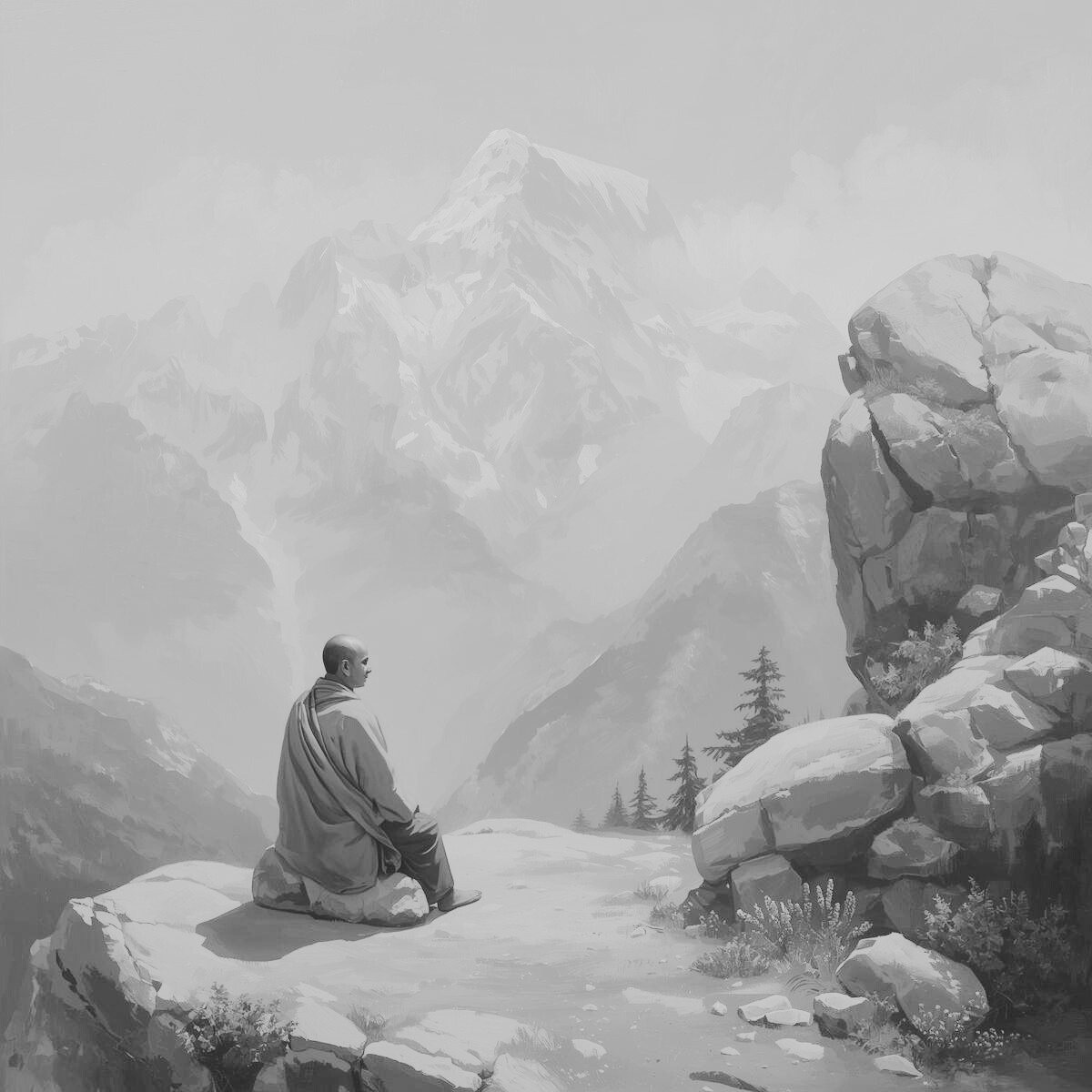
Living as a Monk
Life in the monastery was simple, but in its simplicity, I found what I had been missing.
Mornings: study of Buddhist philosophy, words I could barely grasp, yet whose essence stirred something in me. Daytimes: I joined the young monks, teaching the smallest children basic lessons. Their laughter was pure, their joy unforced. Evenings: I sat before the Guru, sometimes asking foolish questions, sometimes just sitting in silence.
The monks had little—no wealth, no possessions, no ambitions. And yet, they smiled more than anyone I had ever seen. Their joy was contagious, their peace radiant.
I realized then: poverty is not the absence of wealth. Poverty is the absence of peace. And here, in the monastery, even children were rich.
Lots of Questions
But my mind did not rest easily. I asked many questions, trying to measure one philosophy against another. I compared the Vedas with Buddhism. I listed pros and cons. I tried to structure infinity with logic.
The Guru never dismissed me. He only smiled and sometimes offered words that cut through all my complications: “You cannot catch the sky in your hands. You cannot drink the ocean with a spoon. Truth is not in comparing scriptures. Truth is here.”
Then he pointed to my chest. “The way out is the way in.”
His words echoed like thunder inside me.
The Dharma Dance Ceremony
On the third day, the Dharma Dance Ceremony began.
The courtyard came alive with the beating of drums, the blast of horns, the deep call of conch shells. Butter lamps flickered against the monastery walls. Monks in elaborate robes and masks entered the circle—each mask a face of the mind.
At first, it seemed like ritual theatre. But soon, I remembered the Guru’s words: “These are not gods or demons. They are your impressions. Do not fear.”
- A mask of wrath, eyes wide, mouth fierce.
- A mask of dazzling desire, colorful and tempting.
- A mask of sorrow, heavy and dark.
- A mask of ignorance, blank and dull.
- A mask of compassion, radiant and warm.
- A mask of joy, dancing freely.
- A final mask of stillness, serene, unmoving.
As each dancer moved before me, I saw not costumes—but mirrors. These were my own emotions, my own desires, my own shadows. At first, fear rose in me, but I remembered: witness, don’t identify.
Slowly, the fear dissolved. I could see wrath without becoming wrath. Desire without chasing it. Sorrow without drowning in it.
When compassion appeared, tears filled my eyes—not of sadness, but of recognition. When joy danced, I felt laughter rise in me. And when the final mask appeared—the mask of emptiness—everything else fell away. The horns, the drums, even the dancers. All dissolved into silence.
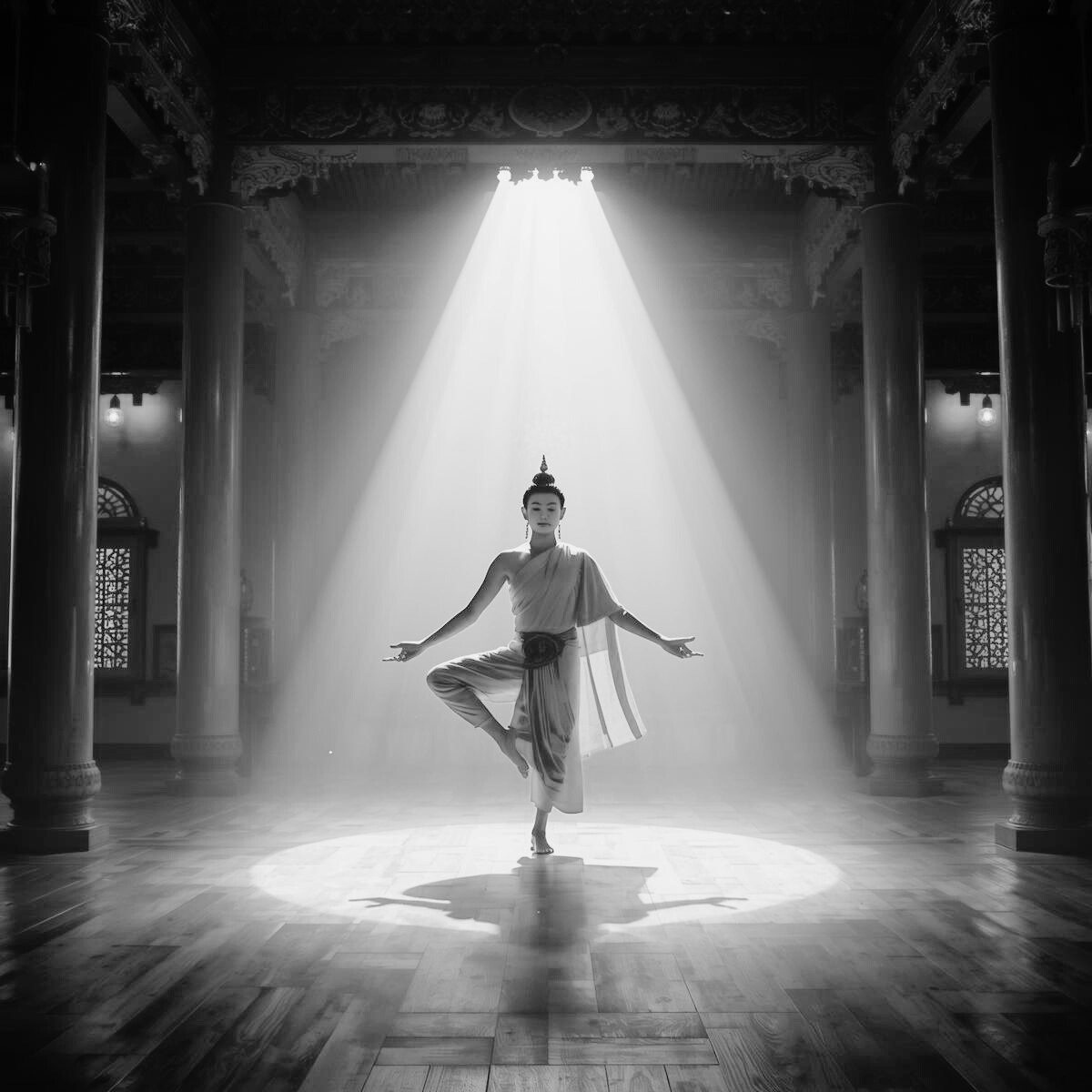
I realized: the masks are mine, but I am not the masks. I am the one who watches.
Closing Reflection
Seven days at Yalbang did not give me answers—they gave me a compass.
The teacher showed me that study begins when sorrow, desire, and ignorance are left at the door. The Guru showed me that my fears and desires are only masks—and masks cannot touch the witness. The monks showed me that joy does not come from having much, but from carrying little.
And I discovered that emptiness is not nothingness. It is spaciousness. The silence that allows life to breathe.
I left Yalbang not with less confusion, but with more courage. Not with final answers, but with a path: The way out is the way in.
The Dharma Dance
“The masks you see are your own mind.” Touch each mask to turn it — and read the question it asks of you.
Seven masks, one face. When the dance ends, only the dancer remains.
Journal
“What software is running now? Sorrow, desire, or ignorance — or awareness?”