When Silence Spoke First
Silence, the journey to Humla, the family who taught love — pages 24-31
“AUM—the silence before sound, the echo after truth.”
Silence Is the First Teacher
I thought my life was ordinary—college in the morning, helping at my father’s shop in the evening. Food was never missing, comfort was always present, yet I felt like a free bird trapped in a cage. I had everything, but I had nothing.
So I chose to walk away—not from family, not from duty, but from the weight of unasked questions. I decided to go alone to Kailash, seeking not adventure but an answer.
My bag was heavy with plans: clothes, shoes, food, even butane gas to cook with. I had mapped every stop, every day, every detail.
But silence was waiting. At the airport security, my entire plan was undone in seconds when the gas was confiscated. For a moment I froze—my survival depended on it. Then, with the plane about to leave, a whisper rose inside: Progress, believe in God’s plan.
I stepped into the flight lighter than I had ever been—not because my bag was empty, but because my grip on control had loosened. From that moment I vowed: I will not plan another thing. Whatever comes, I will accept.
Silence became my first teacher.
The Sacred Sound of the Unspoken
Simikot airport, Humla—the landing itself felt like entering another world. Thin air cut into my lungs. Faces weathered by mountain life looked at me with curiosity. Old men and women offered to carry my bags. My heart trembled: how could I, young and strong, let them carry my burden? Yet they did so without complaint. Their silence was not weakness; it was service.
The road toward Yalbang was long. My bag pressed heavily on my shoulders, but something else pressed deeper inside. After hours of walking, a young sister appeared from the hills and asked, “Dai, have you seen cows above the road?”
Her question was simple. Her smile was not. It carried the vibration of recognition, as if she was not meeting me for the first time, but remembering me from a journey long before.
She asked about Kathmandu, about noodles, about prices. When I said a packet of noodles was twenty rupees in the city, she told me it was one hundred here. Then she added: “We only eat twice a day—morning and evening. No lunch.”
Her words struck louder than any bell. Silence vibrated in the gap between her world and mine.
The Voice of Silence
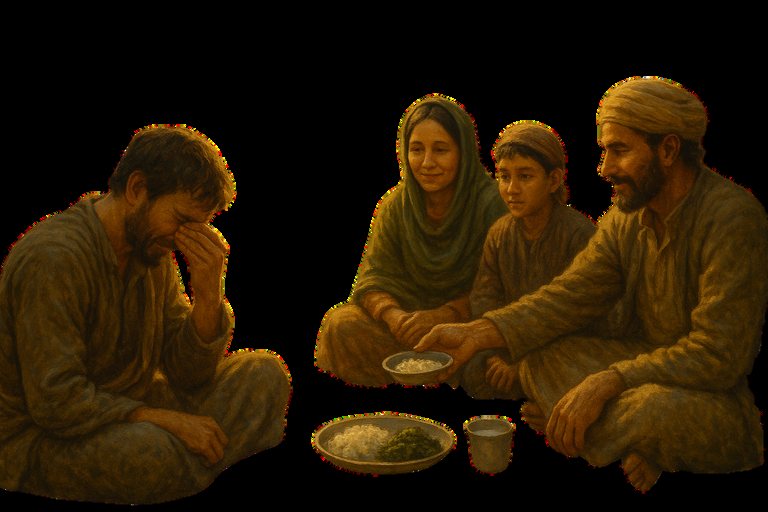
By evening we reached her home. But it wasn’t a house—it was a cattle shed, a goat shelter. Yet when her mother, sisters, and brother welcomed me, I felt something no hotel had ever given me: home.
I pitched my tent outside, but they invited me in. And there, silence spoke through the smallest things. They rarely ate rice—only on festivals. But because I was their guest, they had borrowed rice from somewhere else to cook for me. Just rice. A handful of spinach. A small bowl of milk. Nothing more.
When I ate, tears came before taste. I had lived with choices, with varieties, with spice and salt and sugar. But that night, silence stripped food to its essence—and in that simplicity I heard love. Not the love that speaks loudly, but the love that vibrates quietly through sacrifice.
I cried myself to sleep under their roof of silence. And in the morning, as light revealed a trident standing before their home, I bowed. Not to stone, but to God’s plan. This was no accident. This was my first stop on the way to Kailash—where silence had chosen to speak first.
A Whisper from the Self
In that family I felt reunion, as if ties from another life had been re-knotted. My body was still in Humla, but my soul was vibrating with recognition. I gave them medicine and a little money, not as charity but as devotion—to the bond that silence had revealed.
As I walked onward to Yalbang Monastery, I carried no gas, no plans, no taste for food. Only vibration. Only love. Only silence.
And in that silence, I understood: You are not the body. You are not the mind. To identify with them is misery. But to witness them—to hear their noise without calling it your own—is freedom.
Silence does not need temples or mantras. It speaks in a child’s smile, in dry rice cooked with love, in the breath that continues even when plans collapse. Silence is the first and final teacher. The sound before sound. The echo after truth.
Silence Is Not Empty
I once thought silence meant absence. I was wrong. Silence is full. Full of vibration. Full of presence. Full of intelligence.
When the mind pauses—even briefly—silence reveals itself as alive. It listens. It responds. It teaches—without words. In that silence, I did not disappear. I became aware.

Disregarding the Body and the Mind
A realization followed naturally: To identify with the body is limitation. To identify with the mind is misery. The body ages. The mind fluctuates. But something within observes both.
I was not sorrow. I was watching sorrow. I was not fear. I was aware of fear.
And the moment sorrow was observed—not claimed as “mine”—it loosened its grip. Not through force. Through understanding. Observation dissolves identification. The witness is untouched.
This was not philosophy. It was direct experience.

Emptiness Is Not a Vacuum
At first, emptiness felt frightening. Later, it became obvious. Emptiness is not nothingness. It is space filled with appearances. Houses. Mountains. People. Thoughts. Judgments. Feelings. All appear. None truly exist independently.
These are samsaric phenomena—mental projections, vivid yet insubstantial. They are not false. They are ungraspable. Seeing this did not remove the world. It removed attachment to the world.
Sound, Vibration, and AUM
In silence, sound appeared. Not external sound—but vibration. Breath moved. Heartbeat pulsed. Awareness resonated.
AUM was no longer a chant. It was felt. Within. Without. Sound was not separate from silence. It emerged from it. Returned to it.
Diving Into the Heart
Guidance became clear—without instruction: Dive deep into the heart, the source of being and peace, and establish yourself there. Not in thought. Not in identity. But in being.
Holding onto the self—not the personality, but the witnessing presence—this became the anchor.

Silence did not answer my questions. It ended the need for answers. In that ending, truth stood quietly. Life was no longer something to understand. It was something to be with.
Life lives me. Its breath is mine— and silence is where it first spoke.
Journal
“What software is running now? Sorrow, desire, or ignorance — or awareness?”